
Bay Islands, Honduras · Travel Guide
Roatán Island Travel Information
Everything you need to plan a trip to Roatán, the largest of Honduras’ Bay Islands: where it is, how to get here by air, cruise ship or ferry, getting around, the island’s towns and villages, and what to expect when you arrive.
Flying in? See every direct flight to Roatán.
Roatán at a Glance
Where
Western Caribbean, Honduras
About 35 miles (56 km) off Honduras’ north coast. The largest of the Bay Islands, between Utila and Guanaja.
Size
About 30 miles long
A long, narrow island only a few miles wide, ringed by the Mesoamerican Barrier Reef.
Language
English & Spanish
Bay Islanders speak English; Spanish is the national language, and Garifuna communities keep their own.
Currency
Honduran lempira (HNL)
US dollars are widely accepted across the island.
Airport
Juan Manuel Gálvez Intl (RTB)
In Coxen Hole, with direct flights from the US, Canada and Central America. See every flight.
Cruise ports
Port of Roatán & Isla Tropicale
Two cruise ports about 3 miles apart on the south shore.
Getting around
Taxis, buses, rentals
Plus water taxis between West Bay and West End, and transfers with every excursion we run.
- Local operator since 2013
- Back to Ship Guarantee
- Port & hotel pickup
- Book online in minutes
Where Is Roatán?
Roatán lies in the western Caribbean about 35 miles (56 km) off the north coast of Honduras. It is the largest of the Bay Islands, with Utila to the west and Guanaja to the east, and smaller islands and cays in between such as Morat, Barbareta, Little French Key and Pigeon Cay.
The island sits on the Mesoamerican Barrier Reef, the second-largest barrier reef system on the planet and the largest in the western hemisphere, stretching more than 700 miles from Mexico and Belize to the Bay Islands. Reef close to shore and calm, protected water make Roatán a world-class destination for snorkeling, scuba diving, fishing and boating.
Roatán’s weather stays warm all year, with only about a 10-degree swing in temperature. September through January is the rainier season, with passing downpours between sunshine. Our Roatán weather and climate guide has the month-by-month detail.
Roatán This Month: November 2026
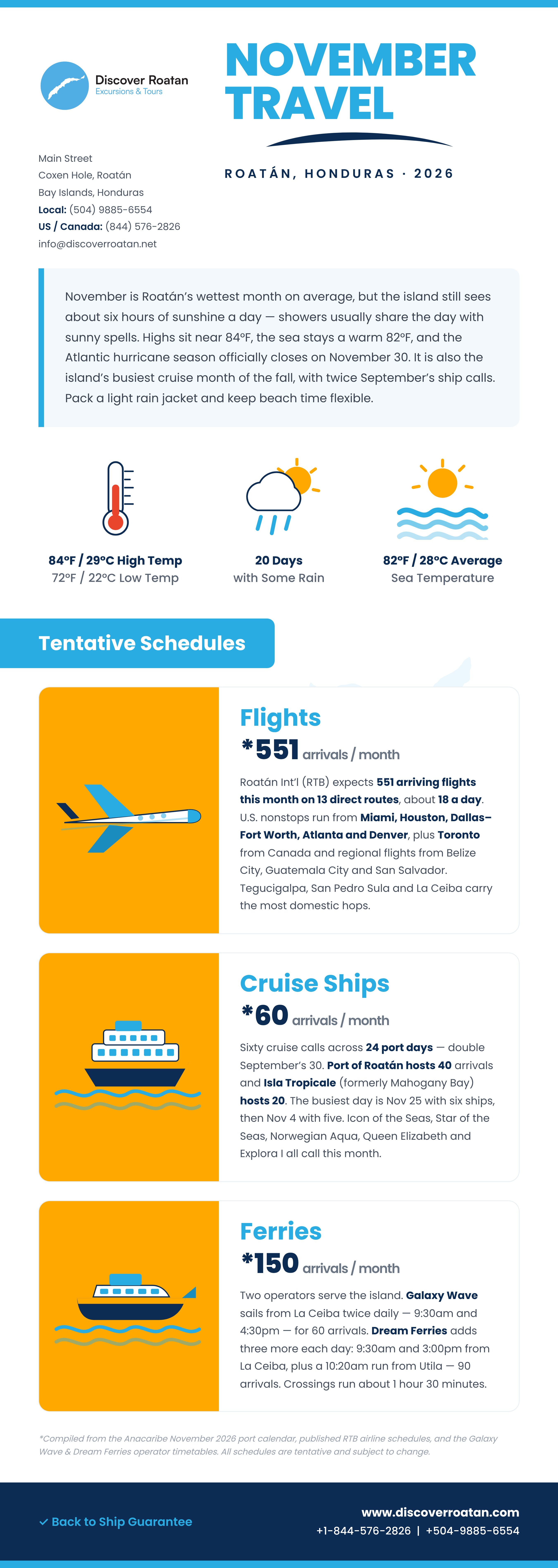
November is the island’s rainiest month, but the rain tends to come in bursts with sunshine in between. Expect highs near 84°F (29°C), a sea around 82°F (28°C) and some rain on about 20 days. Atlantic hurricane season officially ends on November 30.
Flights: 551 flights land at Roatán this month on 13 direct routes, roughly 18 a day. Nonstops come in from Miami, Houston, Dallas–Fort Worth, Atlanta, Denver and Toronto. See our Roatán airport and direct flights guide.
Cruise ships: 60 calls on 24 port days, 40 at Port of Roatán and 20 at Isla Tropicale. The busiest day is November 25, with six ships in port. Every ship and date is on our November 2026 cruise ship schedule.
Ferries: about 150 arrivals from La Ceiba and Utila with Galaxy Wave and Dream Ferries. The crossing from La Ceiba takes about an hour and a half.
Flight, cruise and ferry figures come from published schedules and can change. Weather averages are from our Roatán weather guide. We update this section every month.
How to Get to Roatán
Most visitors arrive by plane or cruise ship, and a few by ferry from the mainland.
By air
Nine airlines fly direct to Juan Manuel Gálvez International Airport (RTB) from Miami, Houston, Dallas, Atlanta, Denver, Minneapolis, Montreal, Toronto, Guatemala City and Belize.
Every direct flight to Roatán →By cruise ship
Ships dock at the Port of Roatán in Coxen Hole or at Isla Tropicale (formerly Mahogany Bay) in Dixon Cove, about 3 miles apart.
Roatán cruise ship schedule →By ferry
Daily passenger ferries connect Roatán with La Ceiba on the Honduran mainland, a popular route for travelers flying into San Pedro Sula.
Flying via San Pedro Sula →Arriving at Roatán Airport
Roatán’s airport is small and easy to navigate. You walk across the tarmac into the terminal, and the immigration line usually takes 20–30 minutes; a photo and digital fingerprints are taken on arrival. You collect your luggage in the same hall and pass it through a scanner, where customs officers may open bags.
Then you step out into the arrivals lobby, where resort drivers hold signs with guests’ names. Taxis wait just outside, and there are car rental desks at the airport. The lobby has a small café and bar, currency exchange, and Tigo and Claro counters for local phone minutes.
Skip the taxi line.
Private airport, ferry and port transfers for up to 4 guests with luggage.
Roatán Cruise Ports
Arriving by cruise ship? Every shore excursion we run comes with our Back to Ship Guarantee, and we plan your day around your all-aboard time. Many ships keep their home-port time on board, so check the ship time vs Roatán local time guide before you head out.
Port of Roatán
In Coxen Hole, the island’s main town, a short drive from West Bay Beach and close to the airport.
Port of Roatán guide →Isla Tropicale
In Dixon Cove, about 3 miles east of Coxen Hole. Formerly known as the Mahogany Bay Cruise Center.
Isla Tropicale guide →Cruise ship schedules
See which ships are in port, and when, for every day of the season.
Roatán cruise ship schedule →Getting Around Roatán
Roatán has one main road running much of the island’s length. Taxis are easy to find in Coxen Hole, West End and West Bay (agree on the fare before you ride), colectivo minibuses run the main road cheaply, and rental cars are available at the airport. Water taxis shuttle between West Bay and West End.
The easier way: every excursion we book includes roundtrip transport from your cruise port, hotel or villa, so you can see the island without renting a car or haggling over fares.
Roatán Towns & Villages
Roatán is small, but its coastline is dotted with towns and villages, most with English names from the island’s British colonial past. Here they are from west to east, with a local tip for each.

West Bay
West end · North shore
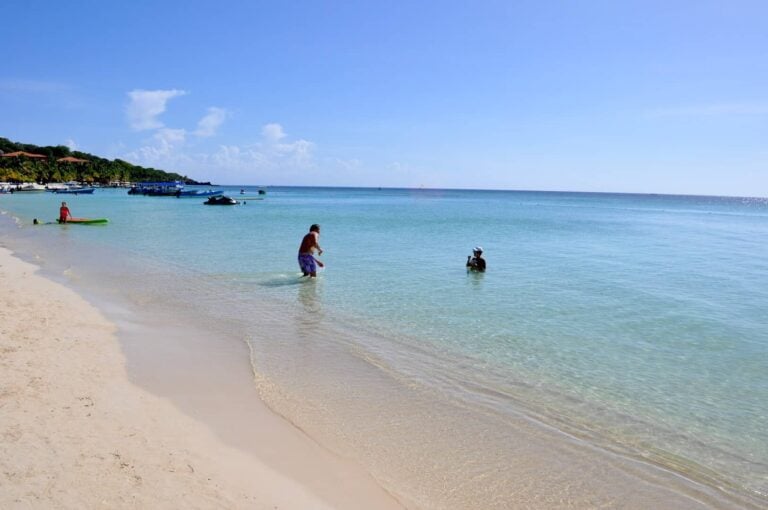
Roatán’s most famous beach. West Bay Beach (Tabyana Beach) is lined with resorts, beach bars and restaurants on white sand and turquoise water, and the West Bay Mall on the main road has a café, pharmacy and shops.
Local tip: Take a water taxi along the shore to West End for a few dollars and see the island from the water.
West Bay Beach day passes →
West End
West end · North shore
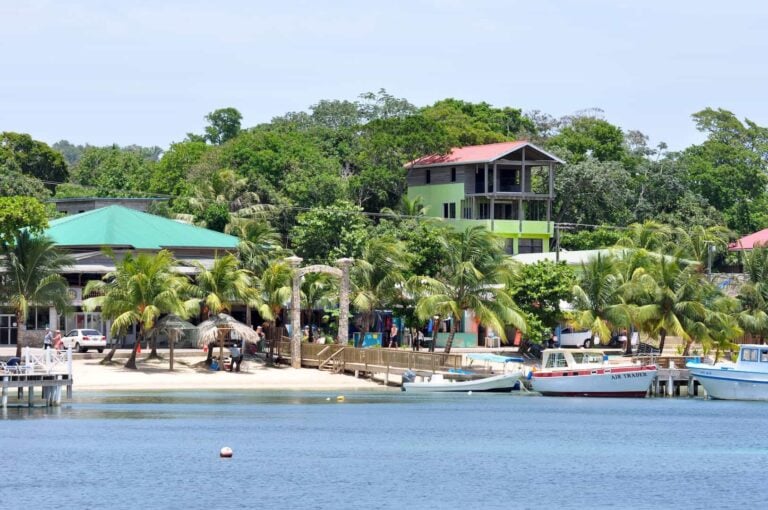
A laid-back village 5–10 minutes from West Bay, facing Half Moon Bay, a calm spot to swim and snorkel. The main street is lined with dive shops, restaurants, bars, art galleries and gift shops.
Local tip: Sundowner’s Beach Bar, right on the sand, is a favorite spot to watch the sunset.
Transfer to West End →
Sandy Bay
West side · North shore
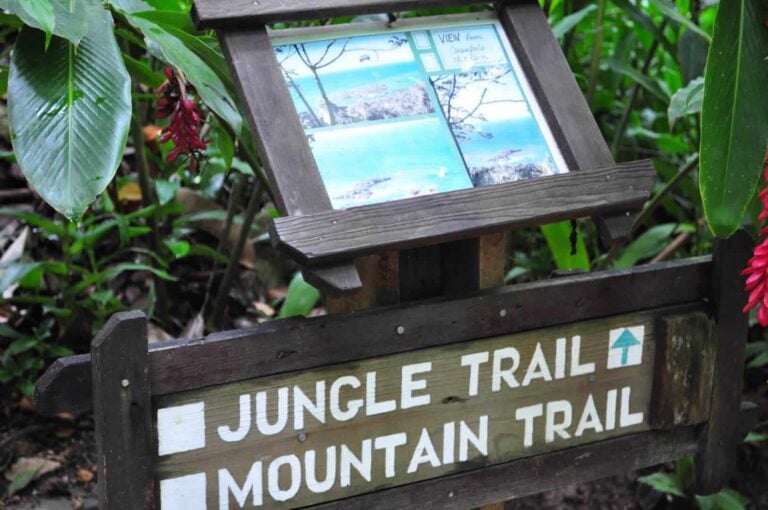
Between Coxen Hole and West End, home to a large expat community, hotels, resorts and the Roatán Institute for Marine Sciences, where our dolphin encounters take place.
Local tip: Carambola Botanical Gardens, in the hills above Sandy Bay, has hiking trails with views over the island and the reef.
Roatán dolphin encounter →
Coxen Hole
South shore
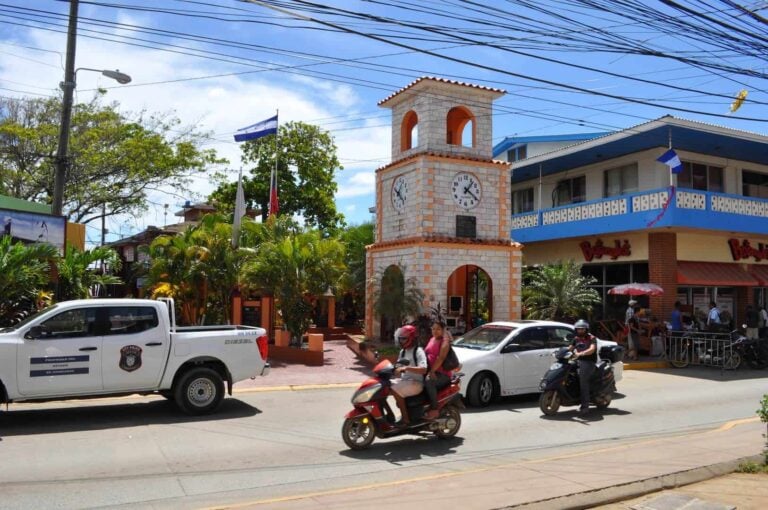
The largest town and capital of the Bay Islands, named after the pirate Captain John Coxon. The airport and the Port of Roatán cruise terminal are both here, along with supermarkets, pharmacies, a hospital and city hall.
Port of Roatán guide →
French Harbour
Central · South shore
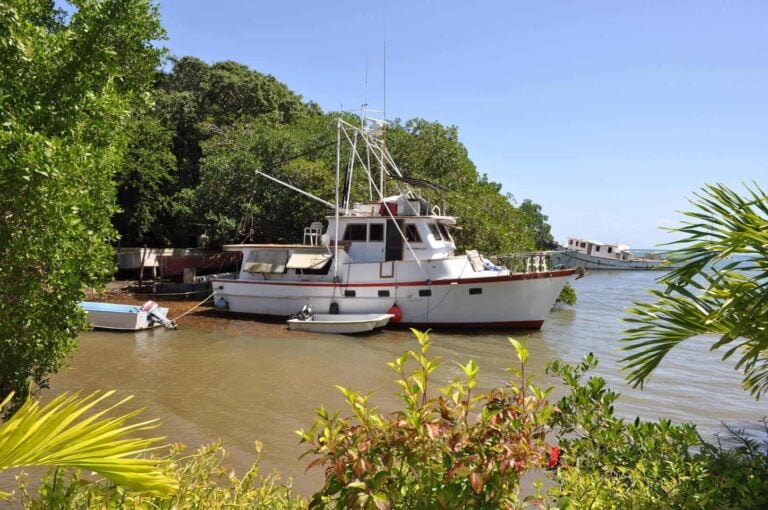
The island’s economic center and home port of one of the Caribbean’s largest fishing fleets. You’ll find banks, restaurants, hotels and resorts in this central town.
Jonesville
East · South shore
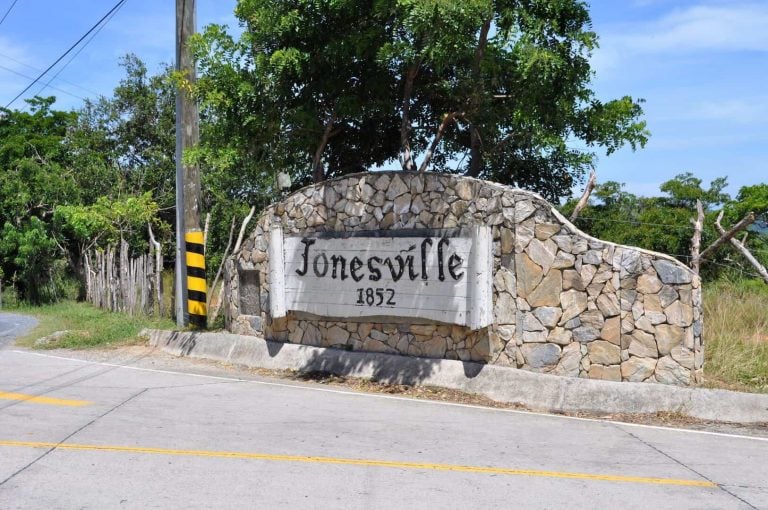
One of the island’s original settlements, a seaside fishing village where much of the commuting is done by boat through the mangroves.
Local tip: Hole in the Wall, an over-the-water bar out in the mangroves, can only be reached by boat.
Mangrove tunnels & culture tour →
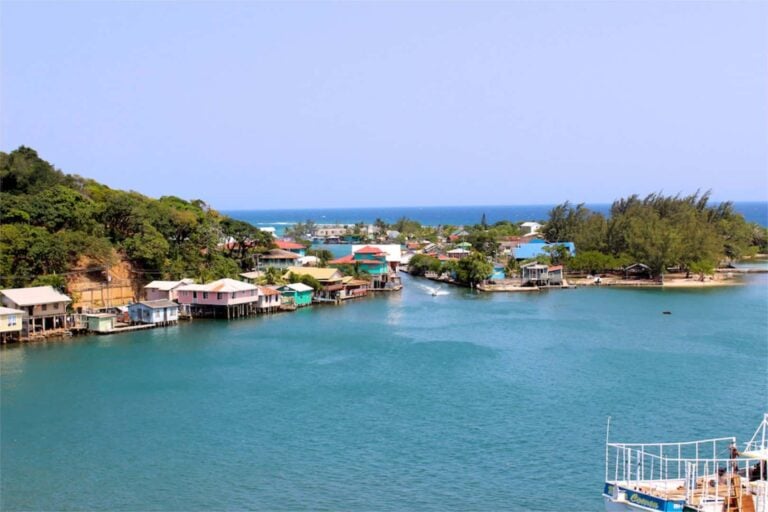
Oak Ridge
East · South shore
Colorful homes on stilts and waterways winding between inlets. Oak Ridge is the starting point for the mangrove tunnels cruise and home to the Santos Guardiola municipal offices.
Mangrove tunnels & culture tour →

Punta Gorda
East · North shore
The oldest settlement on Roatán and home of the Garifuna people, who keep their language, music, dance and traditions alive and share them with visitors.
Local tip: Try machuca, the best-known Garifuna dish, a seafood stew with coconut milk and plantain dough. Every April 12 the village celebrates with a daylong festival of dancing and drumming.
Visit a Garifuna village →
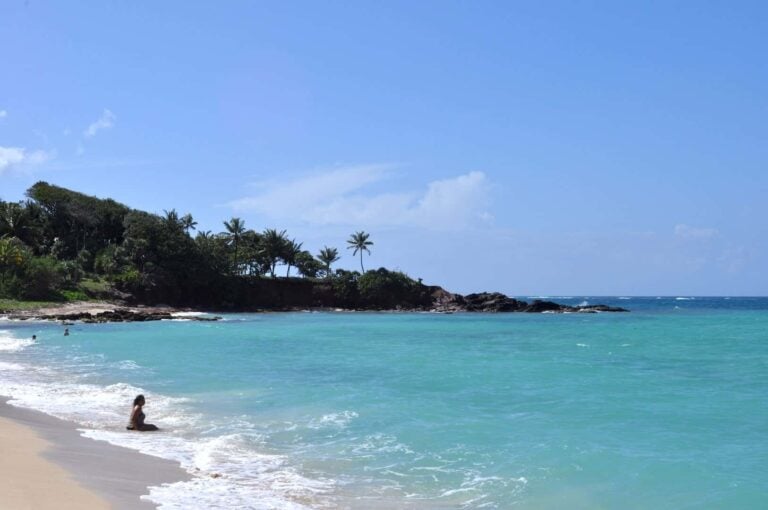
Camp Bay
Far east
The quiet far east of the island, reached on gravel roads through dense rainforest, with Camp Bay Beach, the largest beach on Roatán.
Local tip: Mobile coverage is patchy out here, so plan ahead.
Popular Roatán Excursions
The tours our guests book most, with roundtrip transport from your port or hotel. Live pricing, straight from each tour page.
-
All Inclusive
Fantasy Island Resort All-Inclusive Day Pass
From: $69.99Back to Ship Guarantee!Book Now -
Island Tours
Roatan Culture Tour – Mangrove Tunnels, Iguana Farm, Garifuna Village
From: $99.99Back to Ship Guarantee!Book Now
More Roatán Travel Guides
Roatán airport & direct flights →
Every airline, route and season into RTB.
Roatán weather & climate →
Month-by-month temperatures and rainfall.
Things to do in Roatán →
Our island-wide guide to the best activities.
Top 5 Roatán animal parks →
How the monkey and sloth parks compare.
Port of Roatán →
Coxen Hole cruise port, schedules and excursions.
Isla Tropicale cruise port →
The Dixon Cove port, formerly Mahogany Bay.
Roatán Travel FAQ
Where is Roatán?
Roatán is an island in the western Caribbean about 35 miles (56 km) off the north coast of Honduras. It is the largest of the Bay Islands, between Utila to the west and Guanaja to the east.
Is Roatán part of Honduras?
Yes. Roatán belongs to Honduras and is part of the Bay Islands department, whose capital is Coxen Hole on Roatán.
What language is spoken in Roatán?
English and Spanish. English is widely spoken by Bay Islanders, Spanish is the national language of Honduras, and Garifuna communities such as Punta Gorda also keep their own language.
What currency is used in Roatán?
The Honduran lempira (HNL). US dollars are widely accepted across the island.
What time zone is Roatán in?
Central Standard Time all year, with no daylight saving. Cruise ships often keep their home-port time, so check the difference before your port day.
How do I get to Roatán?
By plane into Juan Manuel Gálvez International Airport (RTB), which has direct flights from the US, Canada and Central America; by cruise ship into the Port of Roatán or Isla Tropicale; or by ferry from La Ceiba on the mainland. See our Roatán airport and direct flights guide.
Do I need a rental car in Roatán?
No. Taxis, colectivo minibuses and water taxis cover the main areas, and every excursion we book includes roundtrip transport from your port or hotel.
Which part of Roatán is best for beaches?
West Bay Beach on the island’s west end is Roatán’s most famous beach, with calm, clear water and resorts along the sand. Half Moon Bay in West End is quieter, and Camp Bay in the far east is the largest beach on the island. See our West Bay Beach day passes.
Plan Your Roatán Days With a Local
Beaches, reef, sloths, ziplines and island culture, with roundtrip transport from your port or hotel and a Back to Ship Guarantee for cruise guests.
Questions? Contact us or WhatsApp +504 9885-6554.


